
When a buyer compares blade fence vs louvered fence, the decision rarely comes down to appearance alone. The real question is whether the installation will deliver enough visual screening for a pool area, commercial patio, or property boundary while maintaining ventilation. I have evaluated both systems on projects ranging from luxury residential to hospitality terraces, and the privacy difference depends largely on blade geometry and installation orientation, not the fence type itself. Both can achieve screening, but they do it through different optical mechanisms that affect what neighbors actually see.
How Blade Fence Angles Control Visibility and Privacy
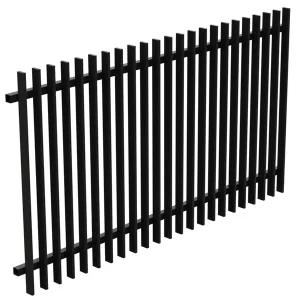
Blade fence panels use flat, vertically oriented aluminum slats with a specific pitch angle. The angle, typically set between 15 and 45 degrees from the panel plane, creates a deep overlap that blocks direct line of sight from most standing and seated viewpoints. The mechanism is simple geometry: each blade casts a shadow zone behind the panel, and as the angle increases, the shadow overlap grows tighter, reducing visible gaps.
I have tested sample panels at our factory where a 30-degree blade pitch completely obscured a person standing two meters behind the fence, even in full daylight. At 15 degrees, partial silhouettes became visible. For residential projects that demand full privacy for a backyard or pool, we typically recommend a blade angle of 25 degrees or more. The angle also influences airflow, so sites with high wind loads may require a steeper pitch to allow air passage while still blocking sightlines.
How Louvered Fence Panels Balance Light, Airflow, and Screening
Louvered fence panels use horizontally arranged slats, similar to window blinds. Each louver is mounted with a fixed incline, usually sloping downward toward the outside face. This design lets air and some daylight pass through the gaps between slats while deflecting the direct view from outside. Privacy is achieved not by blocking light but by misaligning the observer’s line of sight with the gaps between louvers.
In practice, a person standing close to a louvered fence may still see narrow slices of the space behind it, especially if the louvers are set shallow or the viewer is at a high angle. I have observed this on rooftop terraces where adjacent buildings are taller: downward visibility was limited, but horizontal gaps allowed partial glimpses. The screening effect is therefore good but not absolute, making louvered fences ideal for boundary demarcation and semi-private amenity areas rather than high-security privacy.
Comparing Privacy Ratings: Blade Fence vs Louvered Fence
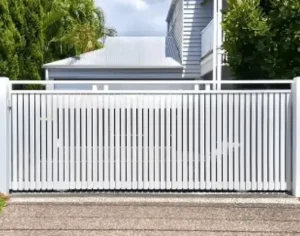
When quantified, blade fences consistently produce a higher privacy rating because the vertical blade overlap blocks light transmission more completely. A louvered panel with a 25-degree slope might allow 15 to 20 percent light penetration when viewed head-on, whereas a blade panel at the same nominal angle can reduce that to 5 percent or less because the shadow zone is continuous from top to bottom.
The table below summarizes the effective privacy and airflow trade-offs we have documented across common configurations.
| Configuration | Blade Angle | Privacy Level | Airflow | Recommended Use |
|---|---|---|---|---|
| Blade fence 25° | 25° | Full screening | Moderate | Pool areas, backyard privacy |
| Blade fence 35° | 35° | Full screening | Higher | Windy coastal sites |
| Louvered fence 25° | 25° | Partial screening | Higher | Semi-private patios, restaurant terraces |
| Louvered fence 15° | 15° | Lower screening | Very high | Boundary walls where ventilation matters more |
If your program involves a specific sightline requirement or compliance with municipal privacy codes, it is worth confirming the actual obscuration performance with the manufacturer using your intended panel height and viewing distances before finalizing your specification. Reach out at sales01@yulongkeji-ch.com with your project parameters and we can verify the geometry for you.
Installation Considerations That Affect Privacy Performance
Even the best panel design can leave gaps if the installation is not precise. For both blade and louvered fences, the post spacing determines whether the panels meet flush or leave vertical gaps. A blade fence panel that is 2,200 mm wide must be mounted between posts set exactly to that center distance. A 10 mm gap between panels may be enough for someone to see through from an angle, negating the screening benefit.
I have seen contractors overlook this on commercial projects where multiple panels join. The effect is cumulative: one small gap may not matter, but if every joint is loose by a few millimeters, the overall privacy level drops noticeably. We specify post brackets and alignment jigs in our installation guidelines to keep panels butted tightly. For louvered fences, the horizontal alignment is equally critical because any tilt in the panel changes the louver angle and widens the visible slits.
Selecting the Right Aluminum Finish and Maintenance for Long-Term Privacy
A privacy fence is only as effective as its durability. The aluminum extrusion itself will not rust, but the powder coating determines how well the panels resist UV fading, chalk, and scratches over years of exposure. Both blade and louvered panels from our facility use architectural-grade polyester powder coat applied over a chromate conversion layer, tested to withstand 1,000 hours of salt spray without blistering.
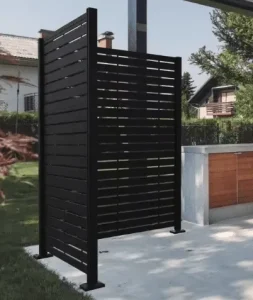
Color selection also affects the subjective privacy feeling. Darker colors such as black or charcoal absorb light and reduce reflection, making it harder to see shapes through gaps. A black blade fence, for instance, appears almost opaque at dusk. Lighter colors reflect more ambient light and can slightly increase visibility through the panel. We advise clients to consider the fence’s orientation relative to the sun and the typical viewing distance when choosing a color.
Specifying a Privacy Fence That Meets Your Requirements
Project planners often struggle to balance privacy needs against design constraints, local wind loads, and budget. A blade fence delivers stronger screening but can look heavier, while a louvered fence feels more open but leaves some visibility under certain angles. Neither is inherently better, but each fits a different set of project conditions.
We manufacture both systems at our Hubei facility and supply them with custom blade angles, slat spacing, and powder coat colors to match architectural specifications. For a quote on blade fence or louvered fence panels, send your panel dimensions, preferred angle, and quantity to sales01@yulongkeji-ch.com or call +8619086315193. Include your project’s wind load and privacy requirements, and we will recommend the appropriate configuration.
Common Questions About Aluminum Blade and Louvered Fence Privacy
Can I adjust blade or louver angles after installation?
Most factory made aluminum blade and louvered fence panels have fixed slat angles set during fabrication. Field adjustment is not practical because the blades or louvers are welded or riveted into the frame. If you anticipate changing privacy needs, we can supply panels with modular blade cassettes that allow angle swapping, though this increases cost and complexity.
Which fence type works better for windy locations?
In my experience, louvered fences with a shallow angle permit smoother wind passage and reduce lateral load on posts. Blade fences, especially at steep angles, act more like a solid wall and can accumulate greater wind pressure. For hurricane prone or high altitude sites, I recommend a louvered design with 15 to 20 degree slope and thicker posts anchored deeper into concrete footings.
What is the typical privacy percentage difference between blade and louvered?
A correctly installed blade fence at 25 degrees can reduce visible light transmission through the panel plane to less than 5 percent, while a comparable louvered fence might allow 15 to 20 percent. The difference is not marginal, and it translates directly into fewer visible lines of sight into the protected area. If your project requires a specific obscuration rating, share your requirements and we will confirm the data for your chosen configuration.
If you’re interested, check out these related articles:
Round Aluminum & Galvanized Steel Fence Posts: Ultimate Guide
Stainless Steel Outdoor Handrails: Options for Steps, Decks & Gardens
Commercial Aluminum Fencing: 5 Key Business Applications
Aluminum Gate Hardware: Hinges, Latches, and Lasting Security