
Steel fencing has a way of revealing its true character only after a few seasons of weather. I’ve watched projects where the initial shine faded within two years, and others where the same fence stood unchanged after a decade of coastal salt exposure. The difference almost always traces back to material treatment and manufacturing precision—factors that remain invisible at installation but define everything that follows. This piece examines what actually determines ornamental steel fence performance: the design decisions that balance security with visual appeal, the metallurgical processes that create lasting corrosion resistance, and the procurement strategies that affect both budget and quality outcomes.
Design Flexibility That Serves Both Function and Form
Effective ornamental steel fence design starts with understanding that security requirements and architectural aesthetics aren’t competing priorities—they’re complementary constraints that shape better solutions. The range of available options spans from clean contemporary lines to detailed traditional ironwork, with custom fabrication allowing architects and project managers to specify patterns, finials, and color finishes matched to existing structures.
The structural components—balusters, pickets, posts, and rails—each carry both load-bearing responsibility and visual weight. Engineering these elements for structural integrity while maintaining visual harmony requires balancing material thickness against profile dimensions. A fence that looks elegant but flexes under wind load fails its primary purpose; one that’s overbuilt appears heavy and industrial where refinement was intended.
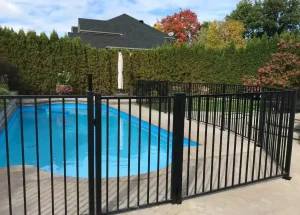
Applications vary considerably in their demands. Residential iron fence installations often prioritize curb appeal and property definition, while commercial perimeter security emphasizes access control and deterrence. Pool fences must meet specific code requirements for height and climbability. Privacy fences need solid or near-solid panel construction. Each application shapes the design parameters differently, though the underlying material science remains consistent.
The design process directly influences property value and visual coherence with surrounding architecture. A well-integrated fence extends the building’s design language to the property boundary rather than interrupting it.
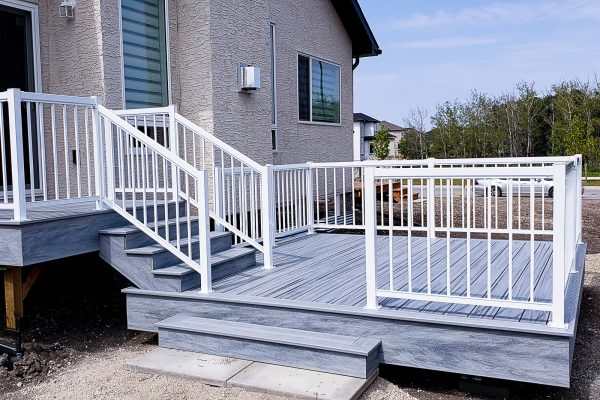
!White
 ### Custom Designs and Their Actual Cost Impact
The assumption that custom ornamental steel fence designs carry prohibitive premiums often doesn’t hold when examining factory-direct procurement. Modular design approaches allow significant customization within standardized manufacturing processes, keeping production efficient while accommodating unique specifications.
The custom steel fence cost increase depends heavily on what’s being customized. Unique color finishes add minimal expense since powder coating lines handle color changes routinely. Modified picket spacing or rail heights require tooling adjustments but remain within normal production variation. Truly bespoke elements—custom-cast finials or non-standard post profiles—do increase costs, though often less than expected when intermediary markups are removed from the equation.
Clients seeking distinctive designs that align with specific aesthetic and functional requirements can achieve them without the budget impact traditional supply chains impose.
Material Science Behind Lasting Performance
The durability gap between ornamental steel fences that deteriorate within years and those that perform for decades comes down to material selection and treatment processes. Understanding these factors explains why superficially similar products deliver vastly different long-term results.
Zinc steel fencing systems begin with high-grade steel substrate selection. The base material’s composition—carbon content, alloy additions, surface cleanliness—affects how well subsequent treatments bond and perform. Starting with inferior steel compromises everything that follows.
Hot-dip galvanization creates the primary corrosion barrier through a metallurgical bond between zinc and steel. This isn’t a surface coating that can peel or chip; the zinc actually alloys with the steel surface, forming intermetallic layers that provide sacrificial protection. Even if the surface is scratched, the surrounding zinc corrodes preferentially, protecting the exposed steel.
The powder coating applied after galvanization serves multiple functions. It provides UV resistance that prevents zinc oxidation from accelerating under sunlight. It creates a moisture barrier that slows the electrochemical reactions driving corrosion. It enables color customization while adding abrasion resistance. Advanced formulations also deliver self-cleaning properties—surfaces that shed dirt and organic matter rather than accumulating staining deposits.
Automated production lines ensure these treatments are applied consistently across every component. Manual processes introduce variation; automated systems maintain the precise temperatures, immersion times, and coating thicknesses that specifications require.
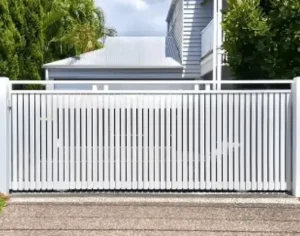
!Aluminum slat fence panels
 ### Expected Service Life Under Real Conditions
Properly treated ornamental steel fences—those receiving full hot-dip galvanization followed by quality powder coating—routinely achieve 20 to 30 years of service with minimal maintenance. Some installations in moderate climates exceed this range significantly.
This longevity reflects the cumulative effect of corrosion resistance and structural integrity working together. The protective treatments prevent the surface degradation that leads to structural weakening. The original material strength remains available throughout the service life rather than diminishing as cross-sections thin from rust.
The practical implication is straightforward: initial investment in properly manufactured fencing returns value over decades rather than requiring replacement cycles that multiply lifetime costs.
Factory-Direct Procurement Economics
The pricing structure for ornamental steel fencing shifts substantially when procurement bypasses distribution layers. Factory-direct purchasing eliminates the margin stacking that occurs as products move through distributors, regional warehouses, and retail channels.
Each intermediary in a traditional supply chain adds markup to cover their operational costs and profit requirements. These additions compound—a 20% margin at each of three stages doesn’t add 60% to the final price; it multiplies to roughly 73% above factory cost. Removing these layers returns that differential to the project budget.
Beyond direct cost reduction, factory-direct relationships improve information flow. Specifications communicate directly to manufacturing rather than passing through interpretation at each handoff. Questions receive answers from engineers rather than sales staff working from product sheets. Custom requirements get evaluated against actual production capabilities rather than catalog limitations.
The wholesale pricing available through direct manufacturer relationships doesn’t require compromising quality or service. It simply reflects the actual cost of manufacturing plus a single reasonable margin, rather than accumulated markups across multiple business entities.
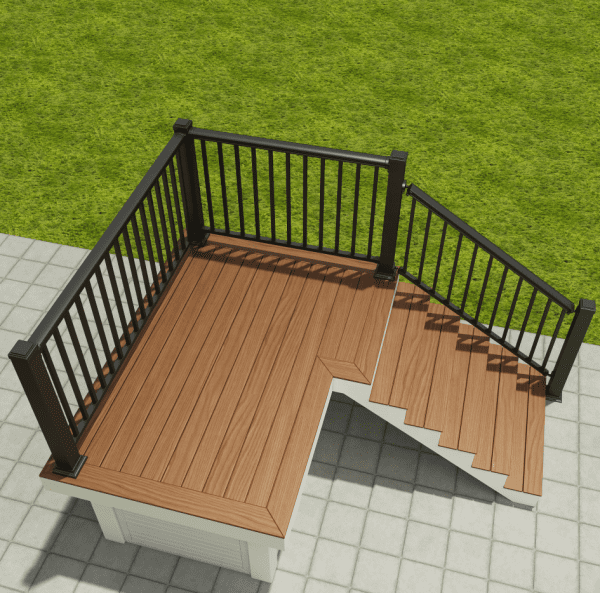
!Railing
 ### Production and Delivery Timelines
Factory-direct ornamental steel fence orders typically move from specification to shipment within 3 to 6 weeks, depending on design complexity and order volume. Automated production lines handle standard configurations efficiently, while custom elements may require additional tooling setup time.
This timeline supports realistic project scheduling when factored into planning from the outset. Expedited processing is possible for urgent requirements, though it may affect pricing or require flexibility on non-critical specifications.
Effective logistics management ensures that production completion translates to timely delivery rather than warehouse delays. Coordination between manufacturing completion and shipping schedules keeps projects on track for installation.
Application Contexts Where Steel Fencing Excels
Ornamental steel fences perform across application types that might seem to require different solutions. The combination of structural capability, aesthetic flexibility, and durability makes them suitable for contexts ranging from residential property definition to industrial perimeter security.
Municipal projects benefit from the dual contribution to urban safety and environmental beautification. Public spaces require fencing that protects without creating visual barriers that fragment neighborhoods. Steel fencing achieves security objectives while maintaining the openness that makes public areas inviting.
Residential communities use ornamental steel fencing for property boundary definition, security, and curb appeal enhancement. The fence becomes part of the property’s presentation, contributing to value through both function and appearance.
Commercial and industrial applications emphasize perimeter security and access control. The strength of steel construction deters intrusion attempts while integrated gate systems manage authorized entry. The professional appearance maintains corporate image standards at the property boundary.
The common thread across these applications is the requirement for durability, low maintenance burden, and visual quality that doesn’t degrade over time. Ornamental steel fencing meets these requirements consistently.
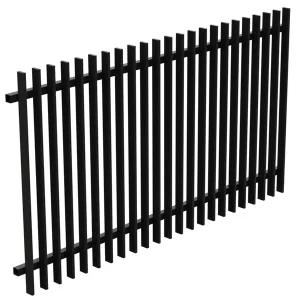
!bla pnl
 ## Manufacturing Excellence as Selection Criteria
Manufacturer selection determines outcome quality more than any other procurement decision. The specifications on paper matter less than the consistency with which they’re achieved in production.
Advanced manufacturing facilities equipped with automated production lines deliver the process control that ensures every fence section meets specification. Surface treatment technology—the galvanization and coating systems—requires precision equipment and rigorous process monitoring to achieve consistent results.
Research and development investment indicates a manufacturer’s commitment to continuous improvement. Material science advances, coating technology evolution, and production efficiency gains all emerge from ongoing R&D programs. Manufacturers who invest in development deliver better products than those simply repeating established processes.
The product range a manufacturer offers—residential iron fence, ornamental steel fence, aluminum balcony railing, aluminum stair railing system, chain link fences—indicates breadth of capability and depth of fencing expertise. Specialists in fencing systems understand application requirements that general metal fabricators may overlook.
Quality assurance systems and customer support infrastructure matter for project execution. Documentation, technical assistance, and responsive communication affect how smoothly projects proceed from specification through installation.
!Residential iron fence two rails
 ## Frequently Asked Questions About Ornamental Steel Fencing
What maintenance do ornamental steel fences require over their service life?
Properly treated ornamental steel fences need remarkably little maintenance. Annual inspection for damage and periodic cleaning to remove accumulated dirt typically suffices. The powder coating surface resists staining and the galvanized substrate prevents corrosion from progressing even if minor surface damage occurs. Avoid using abrasive cleaners that could compromise the coating, and address any significant impact damage promptly to maintain the protective barrier.
How do zinc steel fencing systems compare to aluminum alternatives?
Zinc steel and aluminum fencing serve overlapping but distinct application ranges. Steel offers greater strength and rigidity, making it preferable for security applications and larger span requirements. Aluminum provides lighter weight and inherent corrosion resistance without requiring galvanization, advantages in coastal environments or where installation logistics favor reduced weight. Cost typically favors steel for equivalent strength; aluminum may prove more economical where its lighter construction allows reduced structural support.
What factors most affect ornamental steel fence pricing?
Height, linear footage, and design complexity drive most pricing variation. Taller fences require more material and stronger posts. Greater length obviously increases total cost while potentially reducing per-foot pricing through volume efficiency. Complex designs with custom elements, decorative finials, or non-standard configurations add fabrication time and may require special tooling. Coating color selection rarely affects price significantly unless unusual colors require special-order powder.
Can ornamental steel fencing accommodate sloped terrain?
Steel fence systems handle grade changes through two primary methods: racked panels that follow the slope continuously, or stepped panels that maintain level sections with height adjustments at posts. Racked installations provide smoother visual flow on gradual slopes. Stepped configurations work better for steeper grades or where level panel tops are aesthetically preferred. Most manufacturers accommodate either approach, though specifications must account for the installation method during design.
What installation considerations affect ornamental steel fence performance?
Post setting depth and concrete footing quality determine long-term stability more than any other installation factor. Posts that shift or lean compromise both security and appearance. Proper spacing maintains panel alignment and prevents stress on connections. Hardware torque specifications exist for good reason—over-tightened fasteners can crack powder coating while under-tightened ones allow movement that accelerates wear. Professional installation typically proves worthwhile for the assurance of correct execution.
Connect With Fencing Engineering Specialists
Quality ornamental steel fence systems deliver decades of reliable performance when material science, manufacturing precision, and application understanding align. For projects requiring durable, aesthetically refined fencing solutions, direct consultation with manufacturing specialists clarifies options and optimizes specifications for your specific requirements. Reach our engineering team at +8619086315193 or sales01@yulongkeji-ch.com to discuss how properly engineered steel fencing can serve your project’s security and aesthetic objectives.
If you’re interested, check out these related articles:
YLOONG Solutions: Engineered for Security, Designed for Performance