
Perimeter security for government facilities and military bases sits at the intersection of engineering precision and operational reality. The stakes are high, the threats evolving, and the margin for error essentially nonexistent. Having worked through countless specifications and site assessments, one thing becomes clear: the fencing system you choose shapes everything that follows—response times, integration complexity, long-term maintenance burden, and ultimately, whether your defensive perimeter holds when tested.
Why Government and Military Sites Demand Specialized Perimeter Solutions
Government and military installations operate under security pressures that commercial properties simply never encounter. These sites protect classified information, house critical infrastructure, and shelter personnel whose safety cannot be compromised. The threat landscape spans unauthorized entry and vandalism at the lower end to espionage, coordinated attacks, and vehicle-borne threats at the higher end.
What separates these facilities from standard commercial security is the regulatory environment. Compliance with ASTM and ISO certifications forms the baseline, but departmental requirements—particularly DoD standards for force protection—add layers of specificity that generic fencing solutions cannot address. A comprehensive threat assessment and risk management protocol must drive every specification decision, not the other way around.
| Security Demand | Standard Fencing Capabilities | High-Security Steel Fencing Capabilities |
|---|---|---|
| Threat Mitigation | Deterrent | Anti-climb, Anti-ram, Ballistic |
| Operational Control | Basic access | Integrated access control, Surveillance |
| Regulatory Compliance | Minimal | ASTM F2781, ISO, DoD standards |
| Durability | Moderate | Extreme weather, Corrosion resistance |
| Lifecycle Cost | Frequent maintenance | Low maintenance, Long service life |
How Advanced Steel Fencing Systems Deliver Active Intrusion Resistance
Advanced steel fencing systems have moved well beyond the deterrence model. Modern engineering focuses on active resistance—systems designed to physically prevent intrusion attempts rather than simply discourage them.
Anti-climb fences achieve this through tight mesh patterns or integrated sharp deterrents that make scaling impractical. Anti-ram barriers rely on structural calculations that account for vehicle mass, velocity, and impact angles, ensuring the barrier absorbs and redirects kinetic energy without catastrophic failure. Blast-resistant fencing addresses explosive threats through material selection and connection design that prevents fragmentation and maintains barrier integrity under pressure waves.
The modular nature of these systems matters for practical deployment. Site requirements vary dramatically—a research facility’s perimeter differs from a forward operating base—and the ability to customize configurations without sacrificing structural integrity determines real-world effectiveness. Automated production lines ensure that customization does not introduce quality variance; every component meets identical specifications regardless of configuration complexity.
Integration capability separates adequate systems from effective ones. Access control integration and surveillance integration must be designed into the fencing system from the start, not retrofitted as afterthoughts. The connections, cable routing, and mounting provisions for sensors and cameras need to exist within the fence design itself.
Steel Fencing Types That Meet Military Base Security Requirements
Military base security demands fencing solutions matched to specific threat profiles and zone classifications. Three primary steel fencing types consistently meet these requirements.
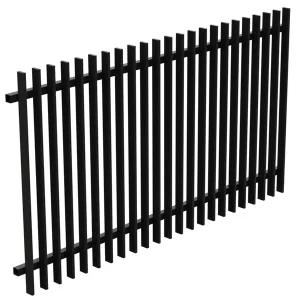
Palisade fencing presents formidable vertical pales that create both visual and physical deterrence. The design resists climbing attempts through pale geometry and resists cutting through material thickness and hardness. Entry points and high-threat perimeter sections typically specify this type.
Welded mesh fences offer a different balance of properties. Small apertures prevent tool insertion for cutting, while heavy gauge wire resists the cutting tools most commonly encountered. The open structure maintains surveillance visibility—a critical consideration for zones where camera coverage must remain unobstructed.
Expanded metal security fencing creates an unyielding barrier with inherent sharp edges that discourage climbing and resist cutting attempts. Restricted areas and zones protecting critical assets often specify this material for its combination of resistance properties.
| Fencing Type | Security Level | Key Features | Primary Application |
|---|---|---|---|
| Palisade Fencing | High | Strong vertical pales, Anti-climb, Anti-cut | High-threat perimeters, Entry points |
| Welded Mesh Fences | Medium-High | Small apertures, Heavy gauge wire, Anti-cut | General perimeter, Surveillance zones |
| Expanded Metal | High | Sharp edges, Unyielding barrier, Anti-climb | Restricted areas, Critical assets |
Material Quality and Surface Treatment Drive Long-Term Fence Performance
The long-term integrity of high-security fences depends entirely on material quality and manufacturing process control. A fence that performs well during installation but degrades within years represents a security liability and a budget failure.
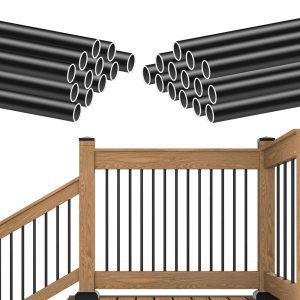
Corrosion resistance and weather durability stem from the interaction between base material selection and surface treatment execution. Galvanized steel components undergo hot-dip galvanizing that creates a metallurgical bond between zinc and steel—not merely a coating but an alloy layer that sacrificially protects the underlying steel even when scratched or damaged.
Powder coating application adds a second protective layer that addresses UV degradation and provides the self-cleaning performance that reduces maintenance burden. The combination of these treatments, applied through automated production lines with consistent process control, delivers the long service life that justifies the initial investment.
This durability focus translates directly into lifecycle cost reduction. Frequent maintenance cycles, premature replacement, and the security gaps that occur during repair work all carry costs that exceed the initial price difference between standard and high-security fencing systems.
The Manufacturing Process Behind Government-Grade Fence Durability
Hubei Yulong durability results from a controlled sequence of material selection and treatment steps. The process begins with high-grade steel, often incorporating zinc steel fencing systems that provide enhanced foundational corrosion protection before any surface treatment begins.
Advanced surface treatment follows a specific protocol. Hot-dip galvanizing immerses components in molten zinc, creating the metallurgical bond that outperforms electroplating or spray-applied zinc coatings. The zinc-steel alloy layer that forms during this process provides corrosion protection that persists even when the surface is mechanically damaged.
Multi-layer powder coating application through automated production ensures consistent film thickness and adhesion across all components. Manual coating processes introduce variance; automated systems eliminate it. Quality control testing at each production stage verifies that every fence panel and component meets specifications before shipment.
Building a Security Ecosystem Around Your Perimeter Fencing
Effective perimeter security for government and military sites requires treating fencing as one component within a larger security ecosystem. The physical barrier creates delay time; electronic systems provide detection and response coordination. Neither works optimally without the other.
Security system interoperability determines whether your integrated systems function as a unified defense or as parallel capabilities that fail to communicate during critical moments. Steel fencing systems designed for optimal integration include provisions for access control systems at entry points, mounting and routing for surveillance integration with CCTV cameras, and sensor attachment points for perimeter intrusion detection systems.
The coordination between these technologies creates layered defense: detection identifies threats, the physical barrier delays them, and response protocols address them. Effective project management ensures these diverse technologies achieve true synergy rather than mere coexistence.
Maintaining Perimeter Integrity While Managing Access Points
Integrating access control integration with high-security steel fencing requires balancing two competing requirements: maintaining barrier integrity while enabling authorized movement. The entry point represents the perimeter’s most vulnerable location, and its design determines whether that vulnerability becomes a weakness.
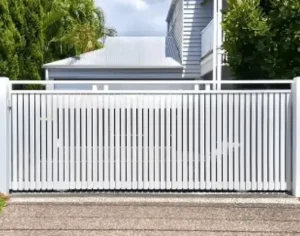
High-security gates must match the protective capabilities of the surrounding fence. A gate that can be breached in seconds adjacent to fencing that resists intrusion for minutes creates an obvious attack vector. Gate construction, locking mechanisms, and hinge security all require specification attention.
Access control technologies range from biometric access systems for highest-security applications to card readers for general personnel entry. The technology selection depends on throughput requirements, security level, and environmental conditions. For vehicles, vehicle barriers and automated gates must address both access control and anti-ram requirements.
Pedestrian gates incorporate these same technologies alongside secure locking mechanisms. Clear security protocols for all entry points, reliable power systems with backup provisions, and communication infrastructure for remote monitoring complete the entry point management requirements.
Evaluating Manufacturers for Government and Military Fencing Projects
Selecting a trusted manufacturer for government and military fencing projects carries consequences that extend well beyond the purchase decision. A reliable partner delivers reliable solutions backed by demonstrated capability and consistent execution.
Vendor selection criteria should evaluate manufacturing capabilities, quality systems, and delivery performance. The manufacturing process must demonstrate precision and consistency—automated production lines with documented process control provide this assurance. Quality assurance protocols should include testing at multiple production stages, not merely final inspection.
Supply chain reliability matters for projects with security implications. Delays create vulnerability windows; material substitutions compromise specifications. Experience in project execution for complex installations indicates whether a manufacturer can deliver customized fencing solutions that meet unique site requirements.
Experience in international markets demonstrates capability across diverse regulatory environments and logistical challenges. Commitment to post-installation support indicates a partnership orientation rather than a transactional approach. Expert consultation throughout the project lifecycle ensures that solutions meet both current requirements and anticipated future needs.
| Selection Criteria | Importance | Hubei Yulong’s Offering |
|---|---|---|
| Manufacturing Capabilities | High | Automated production lines, Advanced technology |
| Quality Assurance | High | ISO certified processes, Rigorous testing |
| Compliance with Standards | High | Adherence to ASTM, ISO, and specific project standards |
| Project Management | High | Experienced teams, Timely delivery, Installation support |
| Customization Options | High | Tailored designs, Material choices, Integration |
| Post-Installation Support | Medium | Technical assistance, Maintenance guidance |
Secure Your Critical Assets with Hubei Yulong
For government agencies and military commands seeking uncompromised perimeter security solutions, Hubei Yulong Building Materials Co., Ltd. offers the expertise and advanced steel fencing systems your mission requires. Contact our specialists today to discuss your project’s unique requirements and discover how our durable, high-performance solutions can fortify your critical assets.
+8619086315193 | sales01@yulongkeji-ch.com
Frequently Asked Questions About High-Security Steel Fencing
Why does steel fencing outperform other materials for government and military perimeter security?
Steel fencing delivers unmatched strength, impact resistance, and longevity for critical installations. The material can be engineered for specific threat profiles—anti-climb configurations, anti-ram ratings, or ballistic resistance—in ways that other materials cannot replicate. Galvanized and powder-coated steel resists harsh weather and corrosion, maintaining structural integrity over decades with minimal maintenance. For high-stakes perimeter security where failure carries unacceptable consequences, steel remains the material of choice.
How does Hubei Yulong approach customization for different facility types?
Customization begins with detailed consultation to understand specific threat assessments, site topography, and regulatory requirements. Automated production lines then translate these requirements into precise configurations—height, gauge, design features, and integration provisions for access control and surveillance. This process ensures each steel fencing system matches the unique security demands of the specific facility, whether a border installation, research complex, or forward operating base.
What lifespan and maintenance requirements should planners expect?
High-security steel fencing systems from Hubei Yulong typically exceed 20-30 years of service life when properly installed. Hot-dip galvanizing and multi-layer powder coating provide the corrosion resistance and weather durability that enable this longevity. Maintenance requirements remain minimal—periodic inspections for damage and occasional cleaning to maintain appearance. This low operational overhead, combined with extended service life, delivers favorable lifecycle cost performance for critical government and military assets.
If you’re interested, check out these related articles:
YLOONG Solutions: Engineered for Security, Designed for Performance