
Sourcing steel fencing from China can reshape your procurement economics in ways that domestic suppliers rarely match. The price differentials are real, and so is the product range. But I’ve watched enough import projects stumble to know that the gap between a successful China sourcing operation and a costly mistake often comes down to preparation—knowing which questions to ask, which documents to demand, and which red flags to walk away from. This isn’t about finding the cheapest quote. It’s about building a supply chain that delivers consistent quality without surprises at customs or on the job site.
Finding Steel Fencing Suppliers You Can Actually Trust
The supplier you choose determines almost everything else in your steel fencing import project. Get this wrong, and no amount of careful logistics planning will save you. Get it right, and you’ve built the foundation for a procurement process that runs smoothly for years.
Reliable Chinese fence manufacturers exist—plenty of them. But they’re mixed in with operations that look professional on paper and fall apart under scrutiny. The verification process matters more here than in most domestic purchasing decisions because you can’t easily visit the factory, and legal recourse across international borders is complicated and expensive.
Defining Your Steel Fencing Specifications First
Before you contact a single supplier, nail down exactly what you need. This sounds obvious, but vague specifications are the root cause of most steel fencing import disputes.
Start with the physical requirements: dimensions, material composition, structural load ratings. If you’re installing in a coastal environment, corrosion resistance becomes non-negotiable—you’ll want advanced galvanization or multi-layer coatings that can handle salt air and humidity. For high-traffic commercial applications, impact resistance and structural integrity under stress matter more than aesthetic finish options.
Product certification requirements vary by market. European buyers need CE marking. North American projects typically require compliance with ASTM standards. ISO certification from the manufacturer provides baseline assurance of quality management systems. Document these requirements explicitly in your initial inquiries—manufacturers who can’t confirm compliance upfront rarely develop that capability during your project timeline.
This upfront work prevents the expensive back-and-forth that happens when samples arrive and don’t match expectations. It also gives you a concrete framework for evaluating supplier responses.
Evaluating Manufacturers Beyond Initial Quotes
Price comparisons tell you almost nothing useful about a steel fencing supplier’s reliability. The manufacturer quoting 15% below everyone else might be cutting corners on material grade, surface treatment, or quality control. Or they might simply be more efficient. You can’t tell from a spreadsheet.
Factory audits reveal what quotes hide. Look for automated production lines—they indicate investment in consistency and capacity. Manual operations aren’t inherently bad, but they introduce more variability in output quality. Examine their quality control systems: How do they inspect incoming raw materials? What testing happens during production? Who signs off on finished products before shipping?
Ask about MOQ requirements and realistic lead times. Suppliers who promise impossibly fast turnarounds are either lying or planning to cut corners. Reputable manufacturers with export experience will give you honest timelines and explain the factors that could affect them.
Surface treatment technology separates adequate fencing from products that last. High-grade powder coating over galvanized steel creates dual-layer protection that significantly extends service life. Manufacturers offering both zinc steel fencing and aluminum fencing options demonstrate broader technical capability and can usually adapt to specific project requirements.
Understanding Import Duties and Customs Requirements
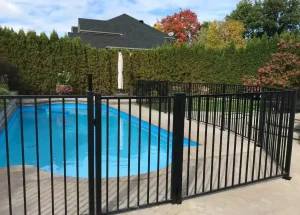
The regulatory side of steel fencing import trips up even experienced procurement professionals. Duties, documentation, and compliance requirements vary by destination country and product classification. Getting this wrong means delays, penalties, or shipments stuck in customs limbo.
Calculating Your True Landed Cost
The price on your purchase order is just the starting point. Your actual cost includes import duties, Value Added Tax, and potentially anti-dumping duties depending on how your products are classified and where they’re going.
Customs valuation determines your tax basis. Undervaluing shipments to reduce duties is illegal and eventually catches up with importers—the penalties far exceed any short-term savings. Work with a qualified customs broker who understands steel fencing classifications in your market. They’ll help you identify the correct tariff codes and HS codes, which directly affect duty rates.
Anti-dumping duties on Chinese steel products exist in several markets. These can add substantial costs that completely change your procurement economics. Know your exposure before you commit to large orders.
Documentation That Prevents Customs Delays
Customs clearance runs smoothly when your paperwork is complete, accurate, and consistent. It stalls when documents conflict with each other or contain errors.
The essential stack includes: bill of lading (or air waybill for air freight), commercial invoice, packing list, and certificate of origin. Your proforma invoice initiates the transaction and should match your final commercial invoice exactly. Discrepancies trigger inspections and delays.
A certificate of origin confirms where your goods were manufactured—this affects duty rates and eligibility for any trade agreement benefits. Insurance certificates protect your cargo and are often required by customs authorities as proof of coverage.
Experienced freight forwarders handle these documents routinely and catch errors before they cause problems. The cost of professional logistics support is trivial compared to the cost of a shipment held at port for documentation issues.
Quality Control for Steel Fencing From China
Quality problems discovered after installation are exponentially more expensive than problems caught before shipment. Effective quality control requires systems, not just good intentions.
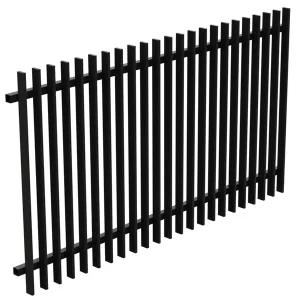
The best Chinese fence manufacturers build quality into their production processes rather than trying to inspect it in at the end. This means rigorous material testing at intake, process controls during manufacturing, and systematic inspection of finished products. Multi-stage surface treatment—cleaning, phosphating, electrostatic powder coating—creates corrosion resistance and weather durability that lasts for decades rather than years.
Third-party inspection services provide independent verification that your supplier’s quality claims match reality. They’re particularly valuable for first orders from new suppliers or for large shipments where the stakes justify the cost.
| Feature | Powder Coating (on Galvanized Steel) | Hot-Dip Galvanizing (Standalone) |
|---|---|---|
| Corrosion Resistance | Excellent (dual layer protection) | Very Good |
| Aesthetic Finish | Wide color/texture options | Metallic grey, less customizable |
| Durability | High, impact resistant | High, abrasion resistant |
| Cost | Moderate to High | Moderate |
| Application | Decorative, architectural, high-end | Industrial, utility, robust |
| Maintenance | Low | Low |
Pre-Shipment Verification Processes
Catching quality issues before your steel fencing leaves China saves money and preserves relationships. Once products ship, your leverage diminishes significantly.
Start with a factory audit if you haven’t worked with the supplier before. This establishes baseline confidence in their capabilities and processes. Request sample testing from accredited laboratories—not the supplier’s internal lab—to verify material properties and coating thickness.
Production inspections at key stages let you catch problems early enough to correct them. A pre-shipment inspection of the completed order confirms that what’s being loaded matches your specifications and quality standards.
Negotiate warranty terms and after-sales support arrangements before you place orders. Suppliers who resist clear warranty language are telling you something about their confidence in their products.
Logistics and Shipping Strategies
Moving steel fencing from Chinese factories to your project sites involves decisions that affect both cost and timing. The right logistics approach depends on your order volume, timeline pressure, and tolerance for complexity.
Ocean freight makes economic sense for large orders where transit time isn’t critical. Container shipping costs per unit drop dramatically as volume increases. Air freight serves urgent needs but at multiples of ocean rates—reserve it for samples, replacement parts, or genuinely time-sensitive situations.
Port selection matters more than most importers realize. The port closest to your supplier isn’t necessarily optimal if it adds days of inland transportation on the destination end. Freight forwarders with steel fencing import experience can model total logistics costs across different routing options.
Incoterms define who bears responsibility and cost at each stage of the journey. Misunderstanding these terms causes disputes. FOB (Free on Board) means you take responsibility once goods are loaded at the origin port. CIF (Cost, Insurance, Freight) means the supplier handles shipping to your destination port. DDP (Delivered Duty Paid) puts maximum responsibility on the supplier. Each has implications for your risk exposure and cash flow.
Container loading procedures prevent the damage that turns a successful procurement into a claims process. Steel fencing requires proper bracing and protection against shifting during transit. Confirm your supplier’s packaging standards and consider specifying requirements in your purchase agreement.
Working With an Established Chinese Fence Manufacturer
Partnering with manufacturers who have genuine export experience changes the character of steel fencing import projects. Companies like Hubei Yulong have already solved the problems that trip up less experienced suppliers—they understand documentation requirements, quality expectations, and communication protocols that international buyers need.
Automated production lines deliver consistency that manual operations struggle to match. When you’re ordering thousands of fence panels, variation between units creates installation headaches and aesthetic problems. Manufacturing technology investment signals a supplier’s commitment to quality and capacity.
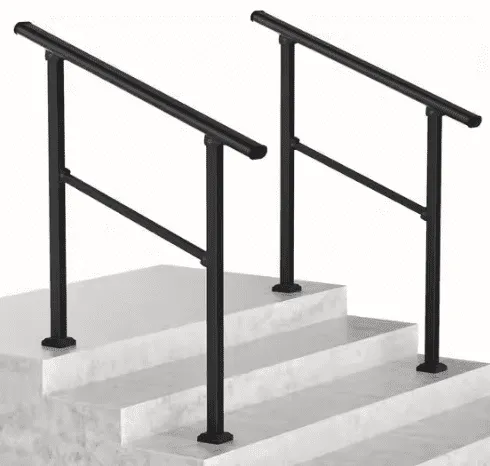
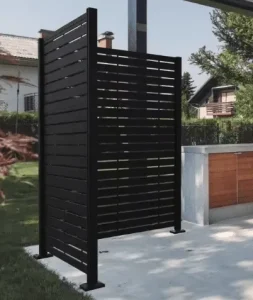
Product range indicates technical capability. Manufacturers offering residential fences, commercial fences, balcony railings, stair handrails, gates, chain link fences, and wire mesh fences have developed expertise across applications. They can adapt to specific project requirements rather than forcing you into their standard configurations.
The surface treatment processes that create corrosion resistance and weather durability—proper galvanization, phosphating, electrostatic powder coating—require equipment investment and process expertise. Manufacturers who’ve made these investments produce steel fencing that performs for its full design life rather than requiring premature replacement.
Frequently Asked Questions About Sourcing Steel Fencing from China
What lead times should I expect for steel fencing orders from China?
Manufacturing typically takes 30-60 days depending on order complexity and volume. Add shipping time on top of that—roughly 25-35 days for ocean freight to most Western ports. Suppliers with automated production lines can often hit the lower end of manufacturing estimates. Build buffer into your project timeline for customs clearance and inland transportation. Rushing international procurement almost always costs more than planning adequate lead time.
How do quality-focused manufacturers protect steel fencing against corrosion?
The best approach combines galvanization with powder coating for dual-layer protection. Galvanization creates a zinc barrier that sacrificially protects the underlying steel. Powder coating adds a durable finish layer that resists impact, UV degradation, and chemical exposure. The preparation process matters as much as the coatings—proper cleaning and phosphating ensure adhesion that lasts. Hubei Yulong’s surface treatment technology produces fencing with documented corrosion resistance that meets international standards for demanding environments.
What steel fencing products are available for international buyers?
Chinese manufacturers serve the full range of fencing applications. Residential fences and commercial fences form the core product lines. Balcony railings and stair handrails address architectural needs. Single-open and double-open gates provide access control. Chain link fences and wire mesh fences serve security and industrial applications. Reputable suppliers like Hubei Yulong maintain product diversity that covers municipal projects, industrial parks, and residential developments across global markets.
Partner with Hubei Yulong for Your Steel Fencing Needs
Ready to secure high-quality steel fencing solutions from a trusted international partner? Hubei Yulong Building Materials Co., Ltd. specializes in advanced aluminum and zinc steel fencing systems, engineered for superior corrosion resistance, weather durability, and a long service life. With automated production lines and extensive export experience, we deliver reliable and aesthetically pleasing fencing for municipal, residential, and commercial projects worldwide. Contact our expert team today to discuss your project requirements and receive a tailored consultation. Email us at sales01@yulongkeji-ch.com or call +8619086315193.
If you’re interested, check out these related articles:
YLOONG Solutions: Engineered for Security, Designed for Performance