
Aluminum gate panels have a way of changing how a home presents itself to the street. The material catches light differently than wood or steel, and the design possibilities run deeper than most homeowners initially expect. After working with countless residential projects, the pattern becomes clear: these panels solve the tension between wanting something visually striking and needing something that won’t demand attention every few months for maintenance.
What Makes Aluminum the Default Choice for Contemporary Gate Design
The shift toward aluminum in gate fabrication reflects more than trend-following. The material’s physical properties align with what modern architecture demands. Lightweight durable gates mean simpler mounting hardware and less stress on hinges over time. The sleekness allows fabricators to achieve lines that would require much heavier gauge steel to replicate structurally.
Aluminum’s recyclability matters more now than it did a decade ago. Homeowners increasingly ask about the environmental footprint of their exterior choices. As an eco-friendly building material, aluminum answers that question without compromising on performance. The manufacturing processes have evolved to the point where decorative aluminum gate panels can be produced with precision that was previously reserved for interior architectural metalwork.
Clean Lines That Age Well
Minimalist gate designs built from aluminum tend to look better at year ten than at year one. The absence of rust progression, the stability of powder-coated finishes, and the resistance to warping mean the original design intent stays intact. Modern architectural gates in this style don’t fight for attention. They establish a boundary and then recede into the overall composition of the property.
The fabrication precision available today allows for tolerances tight enough that gaps remain consistent across temperature swings. This matters more than it might seem. Gates that bind in summer or rattle in winter undermine the sense of quality that drives the initial purchase decision.
Practical Performance Behind the Visual Appeal
Corrosion resistance in aluminum isn’t just a marketing claim. The oxide layer that forms naturally on aluminum surfaces creates a barrier that steel cannot match without additional coatings. Combined with advanced surface treatment technology, the result is weather durability that holds up across coastal salt air, industrial pollution, and freeze-thaw cycles.
Self-cleaning performance sounds like hyperbole until you’ve compared an aluminum panel to a painted steel one after a few seasons. Dirt adhesion differs fundamentally between the two surfaces. The practical outcome is a gate that looks maintained even when it hasn’t been touched in months. Long service life follows from these characteristics, and the maintenance cost savings compound over the ownership period.
Design Directions for Decorative Aluminum Gate Panels
The range of what’s achievable with decorative aluminum gate panels has expanded significantly. Custom gate fabrication now routinely includes perforated gate panels with patterns that would have required hand-cutting a generation ago. Laser-cut designs can reproduce almost any geometric or organic motif with edges clean enough to touch safely.
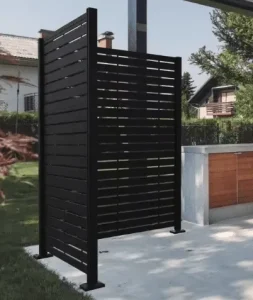 Vertical slat gates create rhythm and shadow play that changes throughout the day. Horizontal slat gates read as more grounded and contemporary. The choice between them often comes down to the dominant lines in the home’s facade. Neither is inherently better, but one will usually feel more coherent with the existing architecture.
Smart home gate integration has moved from luxury to expectation in many markets. Automated access control systems pair naturally with aluminum construction because the material’s light weight reduces motor strain and power consumption. The gate becomes part of the home’s technology ecosystem rather than a standalone mechanical element.
Making Gates Work With Everything Else
The entrance gate sets expectations for the rest of the property. When residential gate styles conflict with balcony railing integration or stair handrail coordination, the dissonance registers even with visitors who couldn’t articulate why something feels off. Matching materials and finish profiles across these elements creates continuity that elevates perceived property value.
Powder-coated finishes make color matching gates to existing trim, shutters, or roofing straightforward. The color range available exceeds what most paint systems offer, and the durability of the finish means the match holds rather than diverging as one element fades faster than another. Property entrance aesthetics depend on this kind of attention to detail.
Selecting Finishes That Perform
The finish decision involves both appearance and functional requirements. Powder-coated finishes bond electrostatically to the aluminum substrate before heat curing, creating a layer that resists chipping, scratching, and UV degradation. Custom gate colors can be matched to architectural color standards or sampled from existing building elements.
Anodized aluminum gates offer an alternative with a different character. The anodizing process thickens the natural oxide layer and can introduce color through dye absorption. The resulting surface has a depth that powder coating doesn’t replicate, though the color range is more limited. Surface hardness increases substantially with anodizing, which matters for high-traffic installations.
Gate finish options should be evaluated against the specific environmental exposure the gate will face. Coastal installations benefit from anodizing’s enhanced corrosion barrier. Inland residential applications often favor the broader color palette of powder coating.
Security and Privacy Through Design
The security function of a gate operates on multiple levels. Physical barrier properties matter, but so does the psychological deterrent of a substantial, well-maintained entrance. Security gate features like automated gate systems and access control gates provide measurable protection by limiting who can enter and logging access events.
Privacy requirements vary by homeowner and by the specific sightlines a gate needs to block. Solid panels provide complete visual screening. Slatted designs can be tuned by adjusting slat width and spacing to achieve partial privacy while maintaining airflow and some transparency. The design conversation should start with understanding what the gate needs to accomplish rather than jumping to a particular style.
This approach to balancing function and appearance runs through our entire product range. For a broader view of how these principles apply across fencing applications, the overview of our engineering philosophy provides useful context.
《YLOONG Solutions: Engineered for Security, Designed for Performance》
The Investment Case for Aluminum Gates
Durable aluminum gates cost more upfront than basic alternatives. The investment logic depends on looking past initial price to total cost of ownership. Property value enhancement from quality entrance elements is well-documented in real estate appraisal literature. The gate is one of the first things prospective buyers see, and first impressions carry disproportionate weight in purchase decisions.
Long service life means the cost per year of ownership drops as the gate remains in service. Cost-effective fencing solutions aren’t always the cheapest to purchase. They’re the ones that deliver the best value over the realistic ownership period. Aluminum’s position as a sustainable building material adds another dimension for owners who factor environmental impact into their decisions.
| Feature | Aluminum Gates | Steel Gates | Wood Gates |
|---|---|---|---|
| Longevity | Excellent | Good | Moderate |
| Maintenance | Low | Moderate | High |
| Corrosion | Resistant | Susceptible | Susceptible |
| Weight | Lightweight | Heavy | Moderate |
| Recyclability | High | Moderate | Low |
| Initial Cost | Moderate | Moderate to High | Low to Moderate |
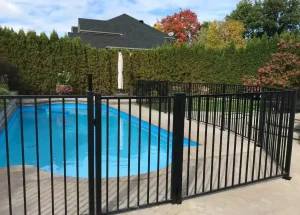
!Residential iron fence two rails
 ## What to Look for in an Aluminum Gate Manufacturer
Manufacturing capability determines what’s possible and what’s consistent. Custom gate fabrication requires equipment and expertise that not every shop possesses. Automated production lines deliver repeatability that manual processes cannot match, which matters when ordering multiple panels that need to align precisely during installation.
Aluminum fence manufacturers with experience across residential fences, commercial metal fence systems, and municipal projects bring perspective that specialists in a single segment lack. The engineering challenges differ between a single residential gate and a perimeter system for an industrial park, but solutions developed for demanding applications often improve residential products as well.
Quality gate suppliers back their products with performance data rather than just marketing claims. Corrosion resistance, weather durability, and self-cleaning performance can all be quantified through standardized testing. Asking for test results separates manufacturers who invest in product development from those who simply fabricate to order.
Zinc steel fencing systems represent another material option worth understanding, particularly for applications where aluminum’s properties aren’t the best fit. A manufacturer with capability across both materials can provide objective guidance rather than pushing whatever they happen to stock.
Frequently Asked Questions About Decorative Aluminum Gate Panels
What advantages do aluminum gate panels have over steel or wood for residential applications?
Aluminum gate panels outperform steel and wood on several metrics that matter for residential use. Corrosion resistance eliminates the rust progression that eventually compromises steel gates, even galvanized ones. The maintenance burden drops substantially compared to wood, which requires periodic sealing, staining, or painting to prevent decay. Design flexibility exceeds what’s practical with heavier materials because aluminum’s strength-to-weight ratio allows for more intricate patterns without structural compromise. The recyclability of aluminum also addresses environmental concerns that increasingly influence purchasing decisions.
What customization options exist for matching decorative aluminum gate panels to specific architectural styles?
Customization starts with pattern selection. Laser-cut designs can reproduce geometric motifs, organic shapes, or custom artwork with precision. Powder coating opens up essentially unlimited color matching to existing architectural elements. Panel configurations range from Aluminum Privacy Screen Panels for complete visual screening to Aluminum Slat Fence designs that balance privacy with transparency. Bespoke aluminum gates can incorporate specific dimensional requirements, hardware preferences, and integration with existing fencing systems to achieve a unified property aesthetic.
How much maintenance do aluminum gate panels actually require?
The honest answer is very little. Surface treatments on quality decorative aluminum gate panels provide self-cleaning properties that prevent dirt from bonding strongly to the finish. Rinsing with a garden hose a few times per year handles normal accumulation. The finish resists fading, chipping, and chalking without recoating. Corrosion isn’t a concern under normal conditions. The low-maintenance reality is one of the primary reasons aluminum has displaced other materials in applications where appearance matters over the long term.
Connect with Hubei Yulong for Advanced Fencing Solutions
Hubei Yulong Building Materials Co., Ltd. specializes in aluminum and zinc steel fencing systems engineered for residential communities, industrial parks, and municipal applications. Our products address both urban safety protection and environmental beautification requirements. Contact us to discuss your project specifications and explore our manufacturing capabilities. Reach us at +8619086315193 or sales01@yulongkeji-ch.com.