
Buying wholesale aluminum fence panels in bulk means getting comfortable with a few moving parts that don’t always move in your favor. MOQ thresholds, pricing tiers, and lead times all interact in ways that can either save a project or quietly drain its margins. The suppliers who make this easier to navigate are worth finding early.
How Minimum Order Quantity Shapes Bulk Aluminum Fence Purchases
Minimum Order Quantity, or MOQ, sets the floor for how many panels a supplier will sell in a single transaction. For wholesale aluminum fence panels, this number reflects real constraints on the manufacturing side. Tooling setup, material batch sizes, and production scheduling all factor into where that threshold lands. Buyers who understand what drives MOQ can negotiate more effectively and avoid ordering more than a project actually needs.
Why MOQ Matters for Bulk Fence Orders
Manufacturers set MOQs to protect their margins on smaller runs. Every production cycle carries fixed costs, from machine calibration to labor allocation for the initial setup. Producing below a certain volume spreads those costs across fewer units, which pushes per-panel pricing higher. That’s why a supplier’s MOQ isn’t arbitrary. It reflects the point where production becomes economically viable for them.
For buyers, this means aligning project scope with realistic order sizes. A residential development requiring 80 panels may find better pricing with suppliers whose MOQ sits at 50, while a commercial contractor ordering 300 panels has more leverage to negotiate custom specifications without hitting inflated minimums.
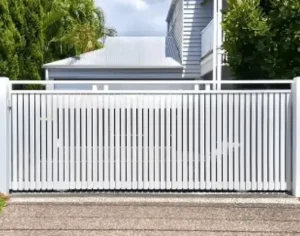
Typical MOQ ranges for different fence panel types and sizes:
| Fence Panel Type | Standard MOQ (Panels) | Custom MOQ (Panels) |
|---|---|---|
| Residential Aluminum | 50-100 | 200+ |
| Commercial Aluminum | 30-75 | 150+ |
| Ornamental Aluminum | 40-80 | 180+ |
| Privacy Aluminum | 25-50 | 100+ |
| Industrial Grade | 20-40 | 80+ |
| Pool Fencing | 50-100 | 200+ |
What Actually Drives Wholesale Aluminum Fence Pricing
Wholesale aluminum fence pricing involves more variables than the raw material cost alone. Securing competitive rates requires understanding how these factors stack up and where negotiation room exists. Focusing only on the initial quote often misses the bigger picture. Supplier reliability, lead time consistency, and product quality all contribute to total cost of ownership over the life of a project.
Factors That Move the Price
Several elements shape the final cost of wholesale aluminum fence panels. Raw material costs fluctuate with global aluminum markets, driven by energy prices for smelting and supply chain conditions. The alloy grade matters too. Higher-strength alloys cost more but may be necessary for commercial or industrial applications.
Manufacturing processes add another layer. Extrusion, welding, and assembly each carry labor and equipment costs. The choice of finish, whether powder coated aluminum fence or anodized, affects both durability and price. Powder coating typically adds cost due to the curing process and material application, but it extends service life in corrosive environments.
Order volume directly influences pricing. Larger orders spread fixed costs across more units, which is why volume discounts exist. Customization, including non-standard dimensions, specific colors, or unique picket designs, also affects the final price. These modifications require additional tooling or manual adjustments that increase production time.
Comparison Chart: Factors affecting aluminum fence wholesale price
| Factor | Impact on Price | Details