
Choosing the right aluminum alloy for outdoor fencing shapes everything that follows — how long the fence lasts, how it handles weather, and whether it still looks good after years of exposure. I’ve seen projects where the wrong alloy choice led to premature wear, and others where the right selection meant decades of trouble-free performance. The decision between grades like 6061 and 6063 comes down to understanding what each brings to the table and matching those properties to your specific situation.
What Makes Aluminum Alloys Work for Outdoor Fencing
Aluminum alloys combine pure aluminum with other elements to create materials with enhanced characteristics. These additions change how the metal behaves mechanically, how it resists corrosion, and how easily it can be shaped. For outdoor fencing materials, the exact composition determines real-world performance under sun, rain, salt air, and temperature swings.
The 6xxx series aluminum alloys, including 6061 and 6063, rely primarily on magnesium and silicon as their main alloying elements. This combination makes them heat-treatable, meaning their strength can be significantly improved through temper designations like T5 or T6. Aluminum extrusion processes shape these alloys into various fence profiles with consistent quality and dimensional accuracy. Getting familiar with these fundamentals helps when evaluating which aluminum alloy fits a particular fencing project.
| Alloying Element | Primary Impact on Aluminum |
|---|---|
| Magnesium (Mg) | Increases strength, improves weldability |
| Silicon (Si) | Enhances strength, improves fluidity for casting |
| Copper (Cu) | Significantly increases strength (e.g., 2xxx series) |
| Zinc (Zn) | High strength (e.g., 7xxx series), good for structural |
Why 6061 Aluminum Handles Heavy-Duty Fencing Demands
6061 aluminum has earned its reputation through consistent performance in demanding applications. The magnesium and silicon content gives this alloy impressive mechanical properties. Heat-treated to the T6 temper, 6061-T6 reaches tensile and yield strength levels that approach some steels. This strength profile makes it the natural choice for structural aluminum fencing where load-bearing capacity and impact resistance matter most.
The weldability of 6061 aluminum opens up possibilities for constructing heavy-duty fence components. Complex designs can be fabricated without sacrificing the alloy’s robust characteristics. Commercial and industrial fencing projects, including security barriers and perimeter fences, often call for 6061 when uncompromising strength tops the priority list. The alloy delivers reliable long-term performance even in challenging outdoor environments.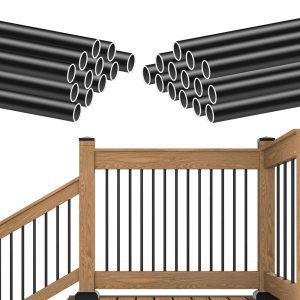
How 6063 Aluminum Balances Appearance and Weather Resistance
6063 aluminum stands out for its superior formability, excellent surface finish, and strong weather durability. Like 6061, it contains magnesium and silicon, and heat treatment to T5 or T6 temper provides a solid balance of strength and ductility. The composition allows intricate architectural aluminum fencing designs through extrusion, producing smooth profiles that look clean and refined.
The natural corrosion resistance of 6063 aluminum makes it well-suited for outdoor exposure. Surface treatments like anodized aluminum fencing enhance this protection by creating a durable oxide layer. Residential fence materials, balcony railings, and decorative panels frequently use 6063 because it combines visual appeal with low maintenance requirements. The smooth surface also accepts powder coating exceptionally well, opening up a wide range of color and finish options.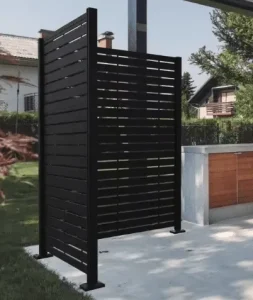
If you are looking for solutions for urban safety protection and environmental beautification, consider exploring 《YLOONG Solutions: Engineered for Security, Designed for Performance》.
Comparing 6061 and 6063 for Outdoor Fence Performance
The choice between 6061 and 6063 aluminum for outdoor fencing depends on weighing project requirements against each alloy’s strengths. The core trade-off involves strength versus formability. 6061 aluminum delivers superior strength, making it the better option for structural elements and applications needing high load resistance or impact protection. 6063 aluminum excels in formability and surface finish, fitting architectural and decorative fence designs where appearance takes priority.
Both alloys demonstrate excellent corrosion resistance, which matters for anything exposed to weather. The smoother surface of 6063 after extrusion often produces a more refined finish, particularly beneficial for anodizing or powder coating. Cost-effectiveness in aluminum fencing can also influence decisions, with 6063 sometimes proving more economical for profiles that don’t require extreme strength. The right choice balances strength, aesthetics, fabrication complexity, and application suitability.
| Feature | Aluminum 6061 (T6) | Aluminum 6063 (T5/T6) |
|---|---|---|
| Strength | High (Tensile Strength: 310 MPa) | Moderate (Tensile Strength: 207 MPa) |
| Formability | Good, but less than 6063 | Excellent, ideal for complex extrusions |
| Surface Finish | Good, can be polished | Very smooth, excellent for aesthetic finishes |
| Corrosion Resistance | Excellent | Excellent |
| Weldability | Good | Good |
| Typical Use | Structural components, heavy-duty applications | Architectural profiles, decorative fencing |
Surface Treatments That Extend Aluminum Fence Life
Selecting the correct aluminum alloy provides the foundation, but surface treatments add critical protection against environmental elements. These treatments significantly extend the long service life of aluminum fencing systems. Powder coating aluminum fence components applies a robust polymer finish that resists chips, scratches, and UV exposure. The process also contributes to self-cleaning fence materials since smooth surfaces accumulate less dirt.
Anodizing aluminum creates a thicker, harder oxide layer than what forms naturally. This electrochemical process boosts corrosion resistance while providing a durable, attractive finish. For outdoor installations, surface treatments go beyond cosmetics. They function as engineered solutions that help fences maintain structural integrity and appearance over decades, even under harsh weather conditions.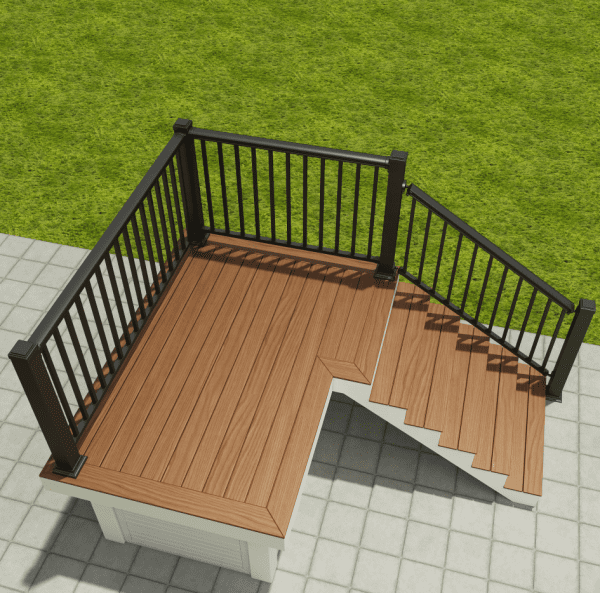
Matching Aluminum Alloy Selection to Project Requirements
Selecting the appropriate aluminum alloy for a fencing project requires looking beyond initial material cost. Start by identifying the fence’s primary function. Security or load-bearing applications typically call for the superior strength of 6061 aluminum. Projects emphasizing intricate designs and pristine finishes point toward 6063 aluminum and its excellent formability.
Environmental factors deserve careful consideration. Exposure to saltwater, extreme temperatures, or industrial pollutants affects how the fence ages. Both 6061 and 6063 offer good corrosion resistance, and specific surface treatments can strengthen protection further. Budget constraints and fabrication complexity also shape the decision. Working with an expert fence advice provider helps ensure all project requirements for aluminum are addressed, leading to installations that perform well and look good over time.
Partner with Hubei Yulong for Your Fencing Needs
At Hubei Yulong Building Materials Co., Ltd., we specialize in delivering robust aluminum and zinc steel fencing systems. Our automated production lines and advanced surface treatment technology ensure products with excellent corrosion resistance, strong weather durability, and a long service life. We offer expert consultation to guide you in selecting the optimal aluminum alloy and design for your specific project, whether it is for residential, commercial, or municipal applications. Contact us today to discuss your requirements and receive a tailored solution. Email us at sales01@yulongkeji-ch.com or call +8619086315193.
Frequently Asked Questions About Aluminum Fencing Alloys
What are the main differences between 6061 and 6063 aluminum for outdoor use?
6061 aluminum delivers superior strength and structural integrity, making it the go-to choice for load-bearing or high-impact outdoor fencing components. 6063 aluminum offers excellent formability, a smoother surface finish, and solid corrosion resistance. This makes it popular for architectural or decorative residential and commercial fences where appearance matters. Both grades provide robust weather durability, but their mechanical properties determine where each performs best.
How does the temper of aluminum alloy affect its performance in fencing?
The temper designation, such as T6 for 6061-T6 or T5/T6 for 6063, directly affects hardness, strength, and workability. Heat treatment processes determine these properties, enhancing tensile and yield strength. For outdoor fencing, proper tempering ensures the aluminum alloy withstands environmental stresses, maintains structural integrity, and resists deformation throughout its service life. This directly influences overall fence durability and performance.
Is 6063 aluminum strong enough for commercial fencing applications?
6063 aluminum in T5 or T6 temper handles many commercial fencing applications well, particularly those prioritizing aesthetics, corrosion resistance, and smooth finishes. While 6061-T6 provides higher ultimate tensile strength for heavy-duty structural components, 6063 strikes a useful balance of strength, formability, and surface quality. It works well for commercial property perimeters, balcony railings, and decorative barriers where weather durability and low maintenance are valued. High-security or extreme load applications may warrant 6061 or a combination of both alloys.